Getting Started
My water quality experiment has been running for a week now but there's very little visible change. This is not surprising considering it was started as a sterile environment with raw tap water and the only things added have been dechlorinator and three Saki Hikari pellets. This is what many koi keepers go through when filling their ponds for the first time and is often referred to as getting the pond to cycle. This means establishing a colony of bacteria in the filter which break down the waste products that build up into safer compounds, ammonia being the most harmful to koi. The cycle part refers to the nitrogen cycle, of which ammonia as a compound of nitrogen is part of.
A koi pond filter can take anywhere between a week to over a month to fully cycle depending on the conditions. Around 20 days is about average to establish a working bio filter but it may take many more months before it's at full strength and mature. This is why new ponds can experience problems often called new pond syndrome when too many koi are added too early. Nearly any body of water will not remain sterile for long and even chlorinated tap water will not kill all organisms, the reason you shouldn't clean contact lenses in it, but there are ways to speed things up.
The quickest way to seed a bio filter is to introduce some media from an already established filter. For most people this isn't an option and it could be a source of introducing disease so the next best thing is to buy a product that contains a ready culture of bacteria. These can be great to get things going or as a boost but they don't contain the true nitrifying bacteria needed for an efficient and stable koi pond filter. The nitrifying bacteria Nitrosomonas and Nitrobacter (Nitrospira is in fact more common as the nitrite reducing bacteria in water) are much slower developing and being autotrophic need a steady supply of the chemicals ammonia and nitrite to feed on, so are very difficult to store alive. Until these bacteria gain in numbers it's best to carry out regular water changes and only introduce a few koi with light feeding to start with.
In my experiment I've not added any bacterial products as I wanted to let things develop naturally and not be influenced by an abundance of certain strains. Most of these products contain heterotrophic bacteria which can feed on a variety of things and are responsible for mineralising organic waste into ammonia. They can do some of the work for the nitrifying bacteria but given a choice they prefer organic waste because it releases more energy.
Without any koi the only source of ammonia so far will be from the food pellets but these first have to be mineralised by hetertrophic bacteria. Having tested the water the ammonia levels are registering at around 0.15 mg/l which in a pond of koi would not be healthy but it does suggests that bacteria are present. One of the sources of the bacteria could have been in the koi food itself as Saki Hikari contains a probiotic to aid digestion. I'm going to switch foods to see if this makes any difference but it maybe something worth investigating later on.
A koi pond filter can take anywhere between a week to over a month to fully cycle depending on the conditions. Around 20 days is about average to establish a working bio filter but it may take many more months before it's at full strength and mature. This is why new ponds can experience problems often called new pond syndrome when too many koi are added too early. Nearly any body of water will not remain sterile for long and even chlorinated tap water will not kill all organisms, the reason you shouldn't clean contact lenses in it, but there are ways to speed things up.
The quickest way to seed a bio filter is to introduce some media from an already established filter. For most people this isn't an option and it could be a source of introducing disease so the next best thing is to buy a product that contains a ready culture of bacteria. These can be great to get things going or as a boost but they don't contain the true nitrifying bacteria needed for an efficient and stable koi pond filter. The nitrifying bacteria Nitrosomonas and Nitrobacter (Nitrospira is in fact more common as the nitrite reducing bacteria in water) are much slower developing and being autotrophic need a steady supply of the chemicals ammonia and nitrite to feed on, so are very difficult to store alive. Until these bacteria gain in numbers it's best to carry out regular water changes and only introduce a few koi with light feeding to start with.
In my experiment I've not added any bacterial products as I wanted to let things develop naturally and not be influenced by an abundance of certain strains. Most of these products contain heterotrophic bacteria which can feed on a variety of things and are responsible for mineralising organic waste into ammonia. They can do some of the work for the nitrifying bacteria but given a choice they prefer organic waste because it releases more energy.
Without any koi the only source of ammonia so far will be from the food pellets but these first have to be mineralised by hetertrophic bacteria. Having tested the water the ammonia levels are registering at around 0.15 mg/l which in a pond of koi would not be healthy but it does suggests that bacteria are present. One of the sources of the bacteria could have been in the koi food itself as Saki Hikari contains a probiotic to aid digestion. I'm going to switch foods to see if this makes any difference but it maybe something worth investigating later on.
Labels: koi pond filters, water quality
posted by Alex-san @ 9:21 AM
1 comments

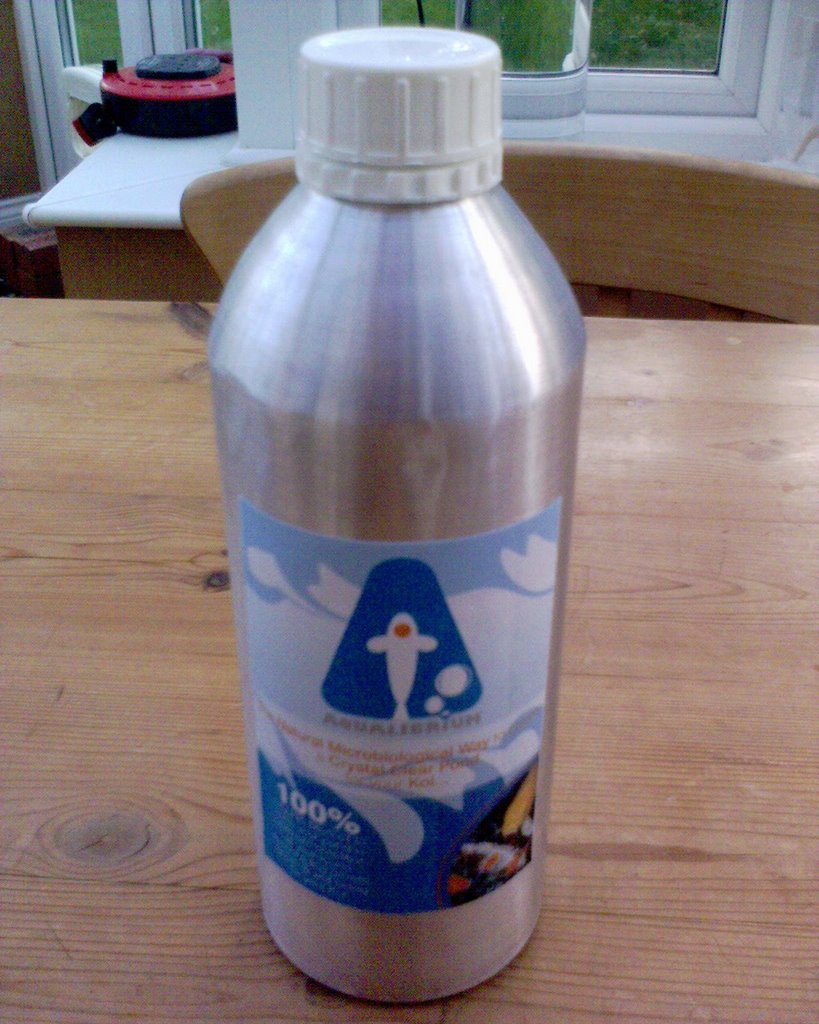
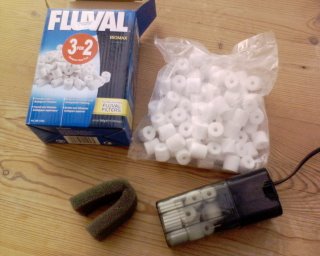
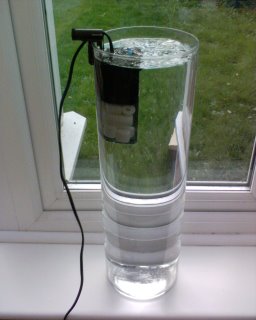 To avoid this possibly becoming like watching paint dry I will update when anything significant happens. As well as a test of Aqualibrium this will also be a good opportunity to explain and try out certain theories of how a koi pond filter works and how you can improve yours.