Water Experiment
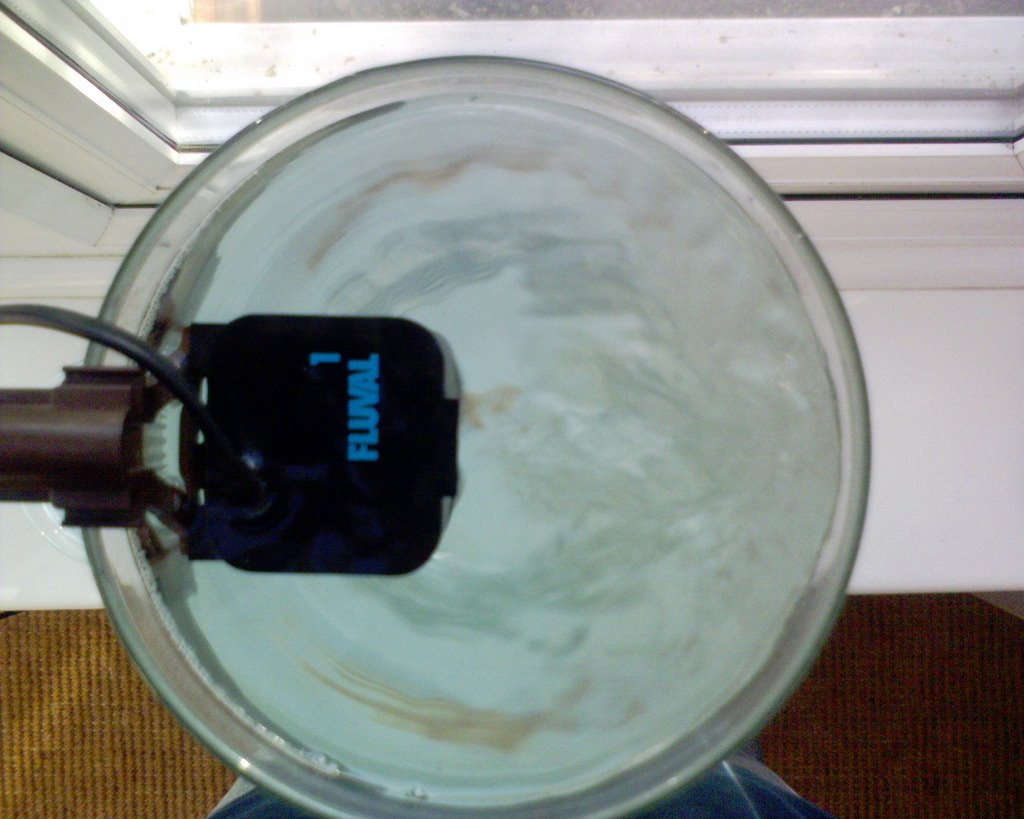
My experiment is now into its third week and slightly disappointingly there's still no sign of any algae. Last weeks weather was very dull and grey though, not ideal for growing algae. So far all I've added is a total of 4 koi pellets. They take on average 2 days to sink and so far only the first one has finally broken up. Earlier in the week the water did become a little milky in colour, which could have been a bacterial bloom but things now look much as they did at the start. This weekend I did a few tests to see if anything was going on.
pH
The first pH reading was 7.5 and quite surprisingly it's now 8.4! I was expecting if anything a move the other way towards acid. Thinking my first test was wrong I have re-tested the tapwater and water left to stand, and got the same results as before. To some fish keepers this may seem obvious but something in tapwater probably CO2 or chlorine, effects the pH. I have heard that carbon water purifiers can lower the pH in much the same way. This means that the pH hasn't changed because of anything in the experiment, but due to it being left to stand.
Ammonia & Nitrite
I have successfully created water that would be deadly to most life, let alone koi. This is a boast I don't want to make too often, but it's good to see a result. Ammonia levels are close to 1 mg/l which at a pH of 8.4 would quickly prove fatal. Equally deadly the nitrite readings are off the scale at over 2 mg/l. The fact they are both present confirms that the koi pellets are being broken down and some nitrification is going on, but it may take a few more weeks to achieve an equilibrium. Although the total ammonia concentrations are much higher in industrial waste water treatments, higher levels can even inhibit the bacteria that feed on it. With nitrite approximately double the ammonia, the next step is establishing enough nitrite oxidising bacteria. I would hazard a guess that the ammonia levels, if not coming down are being controlled.
Nitrate
Nitrate is up to 50 mg/l double what the start level was. I'm not totally sure how this has happened, but I suppose some oxidation of nitrite must have occurred. This is not an unreasonable level to have in a koi pond, and with limited ways for nitrate to escape most people rely on water changes to keep it down. With nitrates in my tapwater measuring 25 mg/l, it's fairly obvious that quite large amounts are needed to control the rise.
Nitrate is often blamed for causing algae but like other plants it is just one of several requirements needed. Algae has even been known to survive in distilled water when all the other components are strong. The levels in my tapwater are more than enough so I will give it a bit more time before looking for clues.
Conclusions so far
I've been really surprised how quickly it has taken for the water to become toxic. Admittedly it's only 10 litres and there's a very small surface area, but this is bigger than some goldfish bowls and the filte r pump turns the water over quickly. This just goes to show how polluting koi food is and how even if the water looks clear it may not be suitable for koi to live in. One reason for the rapid bacterial activity could be due to the probiotics in Saki-Hikari, but I have no way of telling. Visually there is no discernible difference between the two brands of koi food that I have used. This is something I may test in another experiment.
Having only added 4 pellets of food I was worried that without any koi present, part of the cycle was missing and ammonia would be in short supply. There is a technique that some koi and tropical fish keepers use when starting up a new pond or aquarium called a 'fishless cycle'. This is useful because the fish are spared the extremes of ammonia and nitrite as the filter establishes itself. Without the fish an ammonia source has to be added, in my case with the koi pellets, but for those whom don't wish to waste expensive koi food a cheaper and more controllable option is to add ammonium chloride or ammonium hydroxide. These are often found in household cleaners but don't use any with scents or surfactants, only 100% ammonia.
With plenty of nutrients in the water I think I can cut feeding, and possibly change a small amount of water, if ammonia levels don't come down. There are modifications I can make to the set up and I have plans to do other tests, but for now I will keep things simple and see what happens.
pH
The first pH reading was 7.5 and quite surprisingly it's now 8.4! I was expecting if anything a move the other way towards acid. Thinking my first test was wrong I have re-tested the tapwater and water left to stand, and got the same results as before. To some fish keepers this may seem obvious but something in tapwater probably CO2 or chlorine, effects the pH. I have heard that carbon water purifiers can lower the pH in much the same way. This means that the pH hasn't changed because of anything in the experiment, but due to it being left to stand.
Ammonia & Nitrite
I have successfully created water that would be deadly to most life, let alone koi. This is a boast I don't want to make too often, but it's good to see a result. Ammonia levels are close to 1 mg/l which at a pH of 8.4 would quickly prove fatal. Equally deadly the nitrite readings are off the scale at over 2 mg/l. The fact they are both present confirms that the koi pellets are being broken down and some nitrification is going on, but it may take a few more weeks to achieve an equilibrium. Although the total ammonia concentrations are much higher in industrial waste water treatments, higher levels can even inhibit the bacteria that feed on it. With nitrite approximately double the ammonia, the next step is establishing enough nitrite oxidising bacteria. I would hazard a guess that the ammonia levels, if not coming down are being controlled.
Nitrate
Nitrate is up to 50 mg/l double what the start level was. I'm not totally sure how this has happened, but I suppose some oxidation of nitrite must have occurred. This is not an unreasonable level to have in a koi pond, and with limited ways for nitrate to escape most people rely on water changes to keep it down. With nitrates in my tapwater measuring 25 mg/l, it's fairly obvious that quite large amounts are needed to control the rise.
Nitrate is often blamed for causing algae but like other plants it is just one of several requirements needed. Algae has even been known to survive in distilled water when all the other components are strong. The levels in my tapwater are more than enough so I will give it a bit more time before looking for clues.
Conclusions so far
I've been really surprised how quickly it has taken for the water to become toxic. Admittedly it's only 10 litres and there's a very small surface area, but this is bigger than some goldfish bowls and the filte
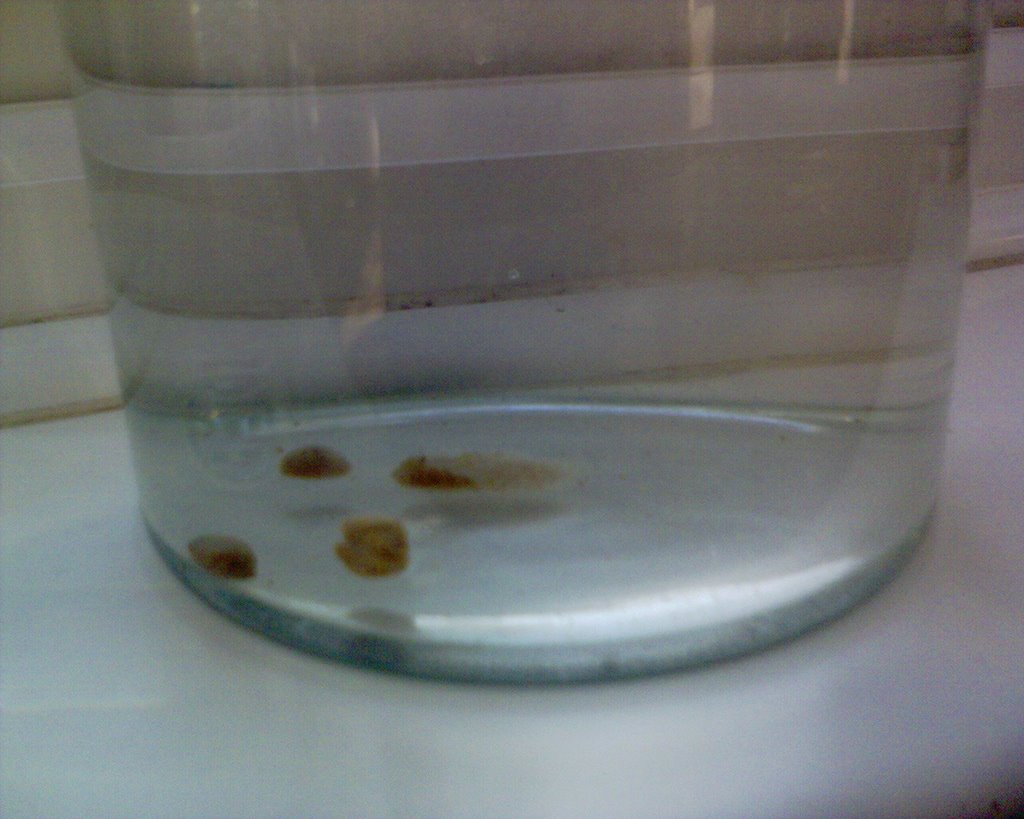 r pump turns the water over quickly. This just goes to show how polluting koi food is and how even if the water looks clear it may not be suitable for koi to live in. One reason for the rapid bacterial activity could be due to the probiotics in Saki-Hikari, but I have no way of telling. Visually there is no discernible difference between the two brands of koi food that I have used. This is something I may test in another experiment.
Having only added 4 pellets of food I was worried that without any koi present, part of the cycle was missing and ammonia would be in short supply. There is a technique that some koi and tropical fish keepers use when starting up a new pond or aquarium called a 'fishless cycle'. This is useful because the fish are spared the extremes of ammonia and nitrite as the filter establishes itself. Without the fish an ammonia source has to be added, in my case with the koi pellets, but for those whom don't wish to waste expensive koi food a cheaper and more controllable option is to add ammonium chloride or ammonium hydroxide. These are often found in household cleaners but don't use any with scents or surfactants, only 100% ammonia.
With plenty of nutrients in the water I think I can cut feeding, and possibly change a small amount of water, if ammonia levels don't come down. There are modifications I can make to the set up and I have plans to do other tests, but for now I will keep things simple and see what happens.
Labels: fishkeeping, koi food, water quality
posted by Alex-san @ 12:38 PM
4 comments

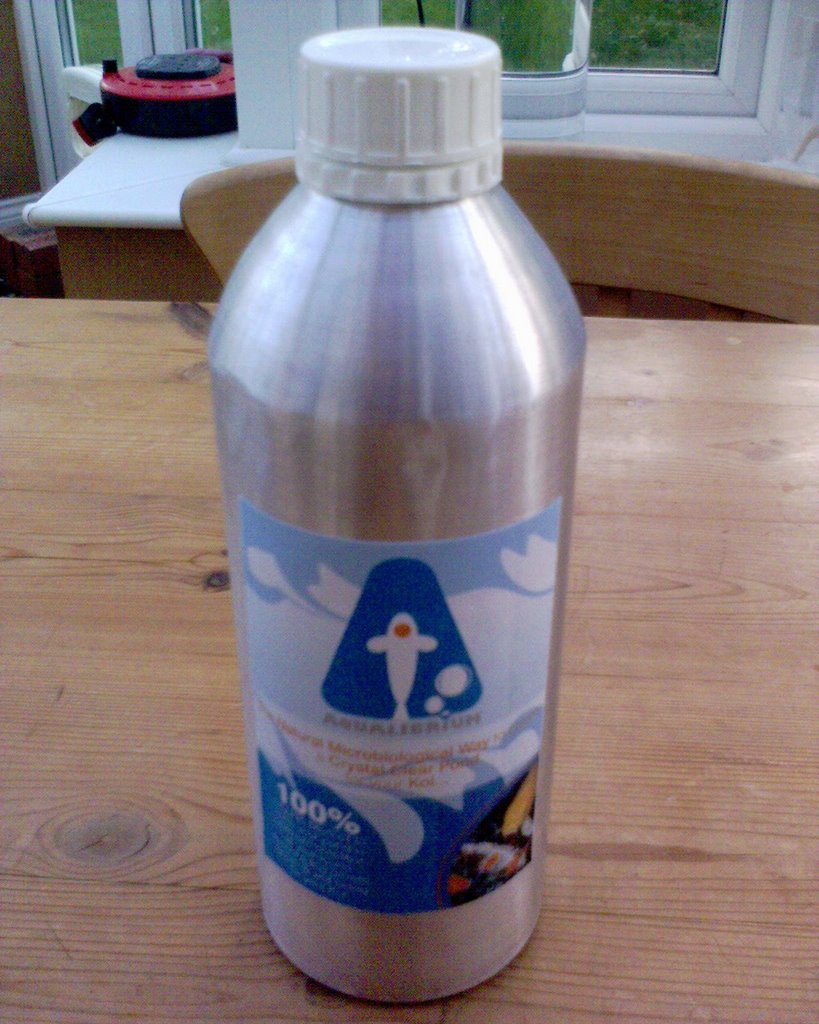
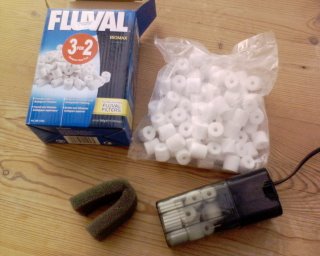
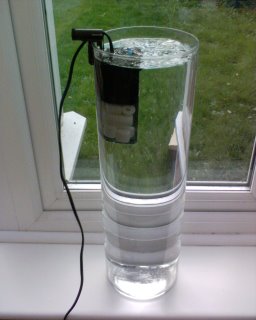 To avoid this possibly becoming like watching paint dry I will update when anything significant happens. As well as a test of Aqualibrium this will also be a good opportunity to explain and try out certain theories of how a koi pond filter works and how you can improve yours.