Thursday, October 19, 2006

Autumn pond maintenance


Listening to the news today it's been reported that the UK has had the longest period of warm weather on record. I doubt this is all to do with global warming and sooner or later things will get back to normal. Now then, if you haven't done so already, is the time to get your koi pond ready for when the cold does eventually arrive.

The koi are definitely benefiting from the warmer weather as they continue to feed, but this should be reduced and only once or twice a day. Feeding koi a wheatgerm based food helps their digestion and the lower protein reduces any waste that the filter has to cope with. As the temperatures drop and your koi become less active so do the bacteria we rely on so heavily to keep the pond healthy. Luckily for our koi the growth of bad bacteria is also slowed but to help prevent any problems we should remove the sources of pollution before they can get a chance.

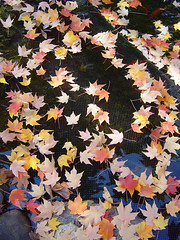
One of the biggest headaches this time of the year are leaves falling in the pond. They seem to be hanging on to some of the trees later this year, as though they like us are not quite ready for this weather to end. The most effective way to keep leaves out is to cover your pond with a weather proof cover or net. These both provide benefits but to some they can prove unsightly and not practical with every shape and design of pond.

The option then is to regularly remove them yourself or with a skimmer. Most leaves floating on the surface won't cause many problems and can even look rather nice, something the Japanese take great delight in, but if left to build up they can block pumps and later decompose effecting water quality. One variety of koi the Ochiba Shigure is even named after its appearance resembling dead leaves on a pond.

If you don't prevent the leaves from entering your pond then make sure the skimmer is regularly emptied or alternatively remove them yourself with a net everyday. This can be a pain but if removed now come spring you will have less problems to deal with. The greatest risks are leaves settling at the bottom or in quiet areas and then turning stagnant. A pond vacuum is very useful for this as well as cleaning out any other areas of the pond that collects dirt. There are a number of bacterial products that claim to remove waste and mulm from a pond before winter, but what needs to be remembered is that they will be less effective the colder it gets and should never be a substitute for good old fashioned cleaning.

Labels: , ,

Sunday, October 08, 2006

Yumekoi Euthanize Koi in the Fight Against KHV

To follow the recent Yumekoi update these shocking before and after photos have been posted on the Yumekoi site. It's very sad and such a waste considering the care and effort that they had been given but necessary. These koi had to be euthanized, even though they may be healthy, to remove any doubt that KHV is still present. Since the Koi Herpes Virus (KHV) outbreak in June, Yumekoi have done everything to prevent the virus from spreading and to reassure their customers. Mike Snaden especially has acted admirably by being open about all the facts, and I am sure that when this dreadful business is all over peoples support for them and confidence in their koi will remain undiminished. It's still a difficult time for them emotionally and financially, so if you would like to help them out Isle of Ely Koi are collecting donations by email at yumekoi@isleofelykoi.co.ukmail.

Labels: ,

Friday, October 06, 2006

KHV Vaccine Starts Trials

A British pharmaceutical company, Henderson Morley plc have announced that they have been working on producing a vaccine against KHV (Koi Herpes Virus) over the past 10 months and from these initial studies are now ready to start field trials. They believe that within 6 months with the help of the Internationally renowned Hagerman Aquaculture Research Institute, they can produce a working vaccine that they can then perfect and licence for use.

The company has a lot of expertise in developing products for the pharmaceutical industry, some of them for human virus diseases so are confident of reaching their goals with KHV. They see KHV as an opportunity to develop a product that will benefit a growing number of koi keepers, breeders and fisheries around the world, as well as a fairly quick return for them because animal medicines don't have to undergo such a lengthy trial period as for humans.

This is very encouraging news but a vaccine may still be along time coming before it's available to all of us. It's very probable that as well as the high costs and methods of administering the vaccine that only koi breeders, dealers and vets will require it anyway. One of the greatest challenges to producing a vaccine against KHV is to immunize the koi without exposing them directly to the virus. The Israeli's have developed a type of vaccination that creates immunity in their koi by introducing them to a weakened strain of KHV, and then destroy it by raising the temperature for a while. This does seem to work but nobody really knows 100% if any of the koi could still be carriers or develop symptoms if reinfected years later. With this in mind we shouldn't take any chances and always quarantine new koi and ensure bio-security measures at all times.

Labels: ,

Yumekoi KHV Update

The latest news from Yumekoi is that they should have received the test results from CEFAS by now and are euthanizing all infected koi. Since Mike Snaden took blood samples from all their koi, and their customers koi that may have come into contact with the KHV outbreak which occurred after the BKKS National, they have had to wait for the results due to CEFAS being overloaded with work. Because of the backlog of samples waiting to be tested CEFAS (Centre for Fisheries, Environment and Aquaculture Science) have had to allocate extra staff to the duty of testing. With CEFAS being the only test centre in the UK that uses the reliable Elisa test that identifies KHV anti-bodies, it's been a long and anxious wait for everybody involved. Yumekoi expect to get all the results back by today, which could decide the fate of some very high quality koi.

This has been probably the worst year on record of reported cases of KHV in the UK, mostly in fisheries but what was once an almost unheard of disease is probably the most talked about topic in koi circles. The scale of the problem in the UK is unknown as some of the cases my go unreported due to the fact that there is no known cure and that there aren't any regulations yet in place to do so. A case recently when men were caught by customs trying to smuggle carp into the country from France in a van, shows how difficult controlling the spread of this disease can be. It's expected that KHV will become a notifiable disease some time early next year and rules governing the movement and sale of live animals within the UK are set to tighten.

All around the world there are conflicting opinions about what to do about KHV and while a reliable vaccine is being worked on some countries see it as less of a problem. Recently scientists in Australia revealed that they have considered releasing KHV into the wild populations of carp as a way to control their numbers, as they are seen as a pest. As KHV only kills carp this would be effective but I don't like the idea of fixing one problem with another. Not all carp are killed by the virus with some acquiring immunity but at the same time being possible carriers to infect others. This would rely on man's intervention not to spread the disease any further which has already been shown to be fallible.

Labels: ,

Monday, September 25, 2006

Koi Health Check


With the end of summer and the highest temperatures behind us, now is a good time to give your koi a quick close check over. By gently putting them in a bowl you can make sure your koi are in good health before they go into winter and also keep track of their development. How much have your koi grown this year? A photograph the same time every year can be very helpful to track each koi's growth and any changes in colour and pattern. This is a great way to learn about nishikigoi and to improve your skills predicting which ones have potential.

If there are any health problems then they can be dealt with now while the water is still warm and the koi's immune systems are at full strength. If needs be the koi can go straight into quarantine to recover to full strength before the onset of the worst winter weather. Depending on how the koi recovers a decision can then be made about whether to keep the koi in quarantine heated throughout the winter.

Labels:

Bloggeries Blog Directory Find Blogs in the Blog Directory Blog Flux Directory